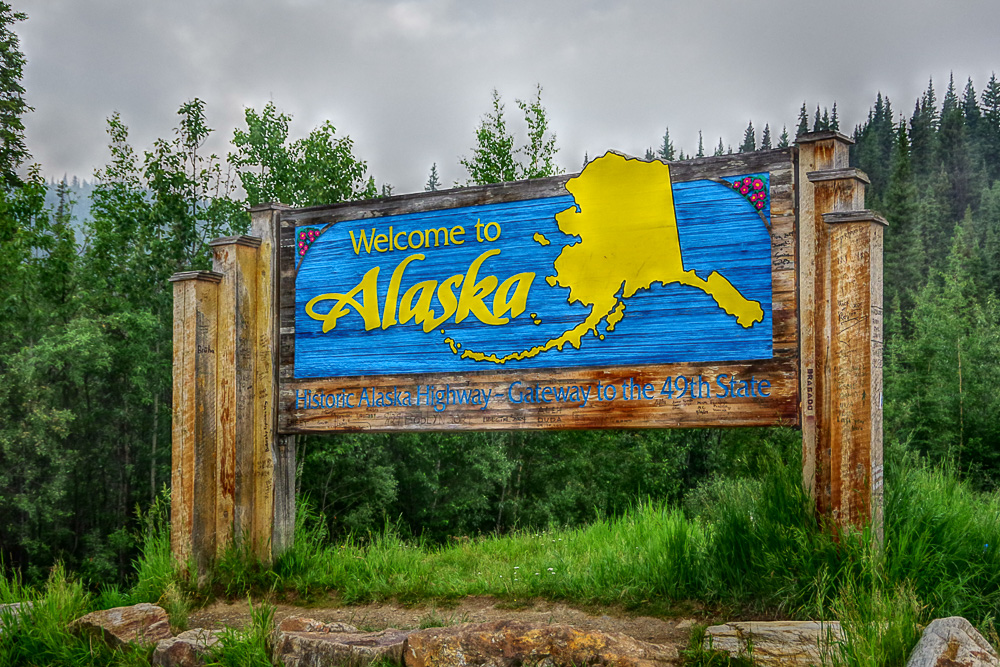

We have quite a few fond memories of our driving trip through Alaska – from the incredible scenery to the wildlife to the people we met there. We learned a lot on our Alaska adventure and wanted to share a few of what we feel are the most important lessons from our trip.
Lesson #1 – Take it Easy on the Alaska Highway

Fight the Urge to “Make Time” and Avoid Damage
While the stretches of the Alaska Highway near Dawson Creek and Delta Junction are in generally good shape and allow 60-70 mph travel without too much risk of damage to your vehicle, the stretch from Haines Junction to the Alaska-Canada border (and some others as well) has stretches that are in tough shape. In many spots the road is a washboard (small bumps) with periodic frost heaves (large dips). This is mainly because the highway is so far north the land it’s built on is permanently frozen. When the highway was originally built that frost stayed intact year-round even though the warm(er) roadway was there, but with our warming climate in many places the frost now melts and leaves the pavement supported by mud.
We lost the shade over our living room window to one of these stretches when we went over a dip in the road that was followed by a pothole at around 40 mph (speed limit was 70 kph or about 44 mph). The sudden drop into the hole and abrupt stop broke the brackets that hold it up. Fortunately I had parts parts with me that allowed me to cobble together a fix, but Alaska in late June without a shade would have made for difficulties sleeping.
We were trying to get through our last full day on the highway, near Beaver Creek, YT, when it happened and in hindsight (always 20/20, right?) I should have been going closer to 30 or 35 mph given the conditions. Live and learn. We took things a bit slower on the way back (maybe easier because we were sad to leave?) and didn’t have any casualties. One thing that might have helped was planning more time on the Highway and for shorter travel days.
Lesson #2 – Learn to Adjust Plans for Wet Weather (Maybe Cold Not So Much)

Prepare for Rain, Add Days to Your Stays
Alaska’s weather is generally wet, so you’ll need rain gear for sure and we knew that going in. We had a few friends who went on and on about how cold it was to the point where we did bring a fair amount of winter clothing with us, expecting it to be colder than it was. Maybe we were just lucky, but while most of the time it wasn’t hot (It did hit 90°F while we were in Fairbanks.) it wasn’t all that cold either. We camp quite a bit in the spring and fall in Minnesota and have seen much colder weather there in late October than any we saw in Alaska.
One thing that worked for us was planning extra days to allow for “weather breaks” when it rains. It didn’t always work, but it did give us some flexibility to schedule shopping or laundry days when the weather was not cooperating.
Lesson #3 – In Alaska’s Parks There Aren’t Always Trails

Be Prepared to Make Your Own Trail
Alaska’s parks don’t have that many maintained trails, partly due to their remoteness and partly due to the relatively small number of visitors. Denali National Park, for instance, has trails, but they’re mostly located in the area along the first 10-15 miles of the Park Road. After that it’s all trail-less.
There are some areas where trails have existed in the past and we did find remnants of these old trails in Denali national Park. We were able to follow for a while before they tend to melt into the grass and willow thickets. Having a good GPS helped a lot, but in the end you need to get used to figuring out your own path. It’s an acquired skill.

Lesson #4 – The Alaska Marine Highway System Works as a Unique Way to Get to Many of Alaska’s Treasures

It’s the Only Way to Get Your Vehicle to Many Alaska Communities
Alaska is a unique place in part because of its remoteness. With so many communities only accessible from the ocean or air, the Alaska Marine Highway System was created to provide reliable connections to them. If you’re traveling in an RV, only Haines and Skagway are accessible by road from the rest of North America.
For the people living in the towns it serves the ferry is the only way to get supplies in and out.
We took the ferry from Haines to Juneau, spent a week there and then took the ferry out to Gustavus and Glacier Bay National Park. From there it was back to Juneau and then on to Skagway to take the land route back home. While getting a large vehicle onto a ferry isn’t without it’s anxious moments, the bosuns (leader of the deck team) and deck hands are really helpful in guiding you onto the boat. It gets tricky at times depending on the tides and what angle the ramp from the car deck is at, but we were able to negotiate our way without any mishaps.
Lesson #5 – The People in Alaska are Incredible

We met a lot of really friendly people in our travels in both Canada and Alaska. From help along the highway to invitations to come into their homes to sharing their catch we felt welcome everywhere we went.
- In Haines we had a man offer help finding our way around the Fort William Seward historical site. After giving us an overview of the fort we started talking and he wound up offering us one of the Dungeness crabs he had caught that morning. It was delicious!
- While camping in Juneau we were making dinner one night and heard a knock on our door. A neighbor said she was making dinner and had more than she could eat and wanted to know if we wanted to share dinner with her. We wound up eating dinner with her and her cat and playing Blokus until 11:00.
- We hiked by a cabin in Wrangell-St. Elias National Park and the occupant came out and invited us in to spend some time by the fire with her and her dog. We spent a couple of hours chatting about her life and aspirations.
The Canadians Were Really Friendly Too
In Alberta we were stopped at a rest stop checking on tires after having one repaired earlier in the day and a couple of young guys stopped to ask if we needed any help. We didn’t, but they were quite friendly and we truly appreciated the offer.


You can check out the rest of our trip on our blog page.




Leave a Reply